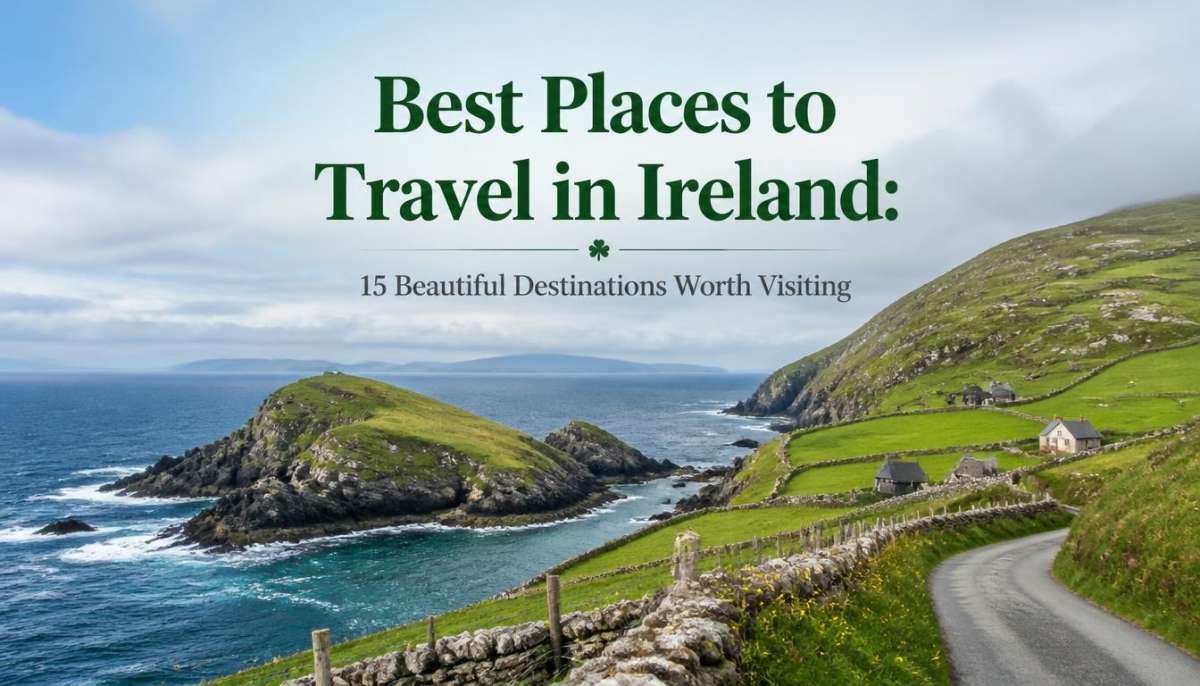
Ireland is a country where historic towns, dramatic coastlines, peaceful countryside, and centuries-old castles come together. You can spend your morning exploring lively city streets, your afternoon walking beside the Atlantic Ocean, and your evening enjoying traditional music in a welcoming local pub.
Whether you enjoy scenic road trips, outdoor adventures, historic landmarks, or charming villages, Ireland has plenty of places worth adding to your travel plans. Some destinations are perfect for a first visit, while others offer a quieter experience away from the busiest tourist areas.
If you are wondering about the best places to travel in Ireland, this guide covers 15 destinations across the country, including famous attractions, beautiful natural landscapes, and places that deserve more attention.
1. Dublin: Explore Ireland’s Capital City
Dublin is often the starting point for an Ireland vacation. The capital combines historic architecture, cultural attractions, shopping streets, museums, and a lively food and pub scene.
One of the city’s most recognizable landmarks is Trinity College Dublin. Its historic campus is home to the famous Book of Kells, an illustrated medieval manuscript. The Old Library is another popular attraction for visitors interested in history and architecture.
You can also visit Dublin Castle, walk along Grafton Street, or explore the Guinness Storehouse to learn about the history of Ireland’s famous stout.
For a different atmosphere, take a short trip to Howth, a coastal village known for its harbor, seafood restaurants, and walking trails. It offers a pleasant break from the busy city center.
Things to do in Dublin:
- Visit Trinity College and the Book of Kells.
- Explore Dublin Castle and its historic grounds.
- Experience the Guinness Storehouse.
- Walk through St. Stephen’s Green.
- Enjoy traditional Irish music in a local pub.
- Take a coastal trip to Howth.
Dublin is a convenient choice for first-time visitors who want to experience Irish culture before exploring the countryside.
2. Cliffs of Moher: Experience Ireland’s Dramatic Coastline
The Cliffs of Moher are among Ireland’s most recognizable natural attractions. Located in County Clare on the country’s west coast, these impressive cliffs rise dramatically above the Atlantic Ocean.
The views are especially memorable on clear days, when you can see the coastline stretching into the distance. The changing weather also gives the landscape a different appearance throughout the day, from bright sunshine to rolling mist.
Visitors can explore designated walking areas and viewing platforms along the cliffs. The visitor experience includes exhibitions about the local landscape, wildlife, and geology.
The area can become busy during peak travel months, so arriving earlier in the day may offer a more relaxed experience.
Things to do at the Cliffs of Moher:
- Enjoy panoramic Atlantic Ocean views.
- Explore the visitor centre.
- Take photographs from designated viewing areas.
- Watch seabirds around the cliffs.
- Visit nearby villages such as Doolin.
If you enjoy dramatic natural scenery, this destination deserves a place on your Ireland itinerary.
3. Galway: Enjoy Traditional Irish Culture
Galway is a lively coastal city on Ireland’s west coast. It is particularly popular with travelers who enjoy traditional music, independent shops, colorful streets, and a relaxed atmosphere.
The Latin Quarter is one of the most enjoyable areas to explore. Its narrow streets are filled with restaurants, cafés, pubs, and small shops. Street performers and musicians often add to the atmosphere.
You can also walk along the River Corrib, visit Galway Cathedral, or spend time near the Spanish Arch. Galway is also an excellent base for exploring Connemara and the Aran Islands.
During summer, the city hosts cultural events and festivals that attract visitors from across Ireland and beyond.
Things to do in Galway:
- Explore the Latin Quarter.
- Listen to live traditional Irish music.
- Visit Galway Cathedral.
- Walk along the Salthill Promenade.
- Take a boat trip to the Aran Islands.
- Explore the surrounding Connemara region.
Galway is a good destination for travelers who want a combination of city life, culture, and access to beautiful coastal landscapes.
4. Killarney National Park: Discover Lakes and Mountains
Killarney National Park in County Kerry is a wonderful destination for nature lovers. It features mountains, lakes, woodlands, waterfalls, and historic buildings across an extensive protected landscape.
The park is home to three famous lakes: Lough Leane, Muckross Lake, and Upper Lake. Their surrounding scenery makes the area particularly attractive for walking, photography, and peaceful outdoor activities.
Muckross House and Gardens are among the park’s best-known historic attractions. The Victorian mansion offers a glimpse into Ireland’s past, while the gardens provide beautiful views of the surrounding landscape.
Visitors can also explore Torc Waterfall, enjoy a boat trip, or take a traditional horse-drawn carriage ride through selected areas.
Things to do in Killarney National Park:
- Visit Muckross House and Gardens.
- Walk to Torc Waterfall.
- Explore the lakes and woodland trails.
- Enjoy cycling along designated routes.
- Take a boat trip on the lakes.
- Photograph the mountain scenery.
Allow at least half a day to explore the park. If you enjoy hiking and outdoor activities, spending a full day here can be worthwhile.
5. Ring of Kerry: Take a Scenic Road Trip
The Ring of Kerry is one of Ireland’s best-known scenic driving routes. This approximately 179-kilometer loop follows the Iveragh Peninsula in County Kerry, passing coastal villages, mountains, beaches, lakes, and historic landmarks.
The route offers a variety of landscapes, making it a rewarding experience for travelers who enjoy road trips. You can stop in small towns, explore viewpoints, and spend time near the coast.
Popular stops include Kenmare, Waterville, Cahersiveen, and viewpoints overlooking the Atlantic. The exact experience depends on how much time you have and which stops you choose.
Driving the entire route can take several hours without extended stops. However, allowing a full day gives you more opportunities to enjoy the scenery rather than rushing from one attraction to another.
Highlights along the Ring of Kerry:
- Explore the town of Kenmare.
- Enjoy coastal views near Waterville.
- Visit traditional villages.
- Stop at scenic mountain viewpoints.
- Discover beaches and historic sites along the peninsula.
The Ring of Kerry is particularly suitable for visitors who want to experience several different landscapes in one journey.
6. Dingle Peninsula: Explore Beautiful Coastal Villages
The Dingle Peninsula is known for its rugged coastline, mountain scenery, colorful villages, and traditional Irish culture. Located in County Kerry, it offers a memorable experience for travelers who prefer scenic landscapes and smaller towns.
Dingle town is a great starting point. Its colorful streets, harbor, independent shops, and restaurants create a welcoming atmosphere.
One of the area’s most popular experiences is Slea Head Drive. This scenic route passes dramatic coastal viewpoints, beaches, historic sites, and traditional stone structures.
Conor Pass is another highlight, offering impressive mountain views. However, its narrow and winding road requires careful driving, especially in poor weather.
Things to do on the Dingle Peninsula:
- Drive along Slea Head Drive.
- Explore Dingle town.
- Visit Inch Beach.
- Enjoy views from Conor Pass.
- Discover local history and traditional culture.
- Try fresh seafood at a local restaurant.
If you want a destination that combines beautiful scenery with a relaxed coastal atmosphere, the Dingle Peninsula is an excellent option.
7. Giant’s Causeway: See Northern Ireland’s Famous Rock Formations
The Giant’s Causeway is a remarkable coastal attraction in County Antrim, Northern Ireland. It is famous for its thousands of interlocking basalt columns, which were formed by volcanic activity millions of years ago.
The unusual geometric shapes make the coastline look almost unreal. Visitors can walk around the rock formations, explore nearby viewpoints, and learn about the area’s geology.
The Giant’s Causeway is also connected to local legends about the giant Finn McCool, adding an interesting cultural story to the natural attraction.
Although it is commonly included in Ireland travel guides, Northern Ireland is part of the United Kingdom. Travelers should consider this when planning transportation, accommodation, and border-related travel arrangements.
Things to do at the Giant’s Causeway:
- Explore the famous basalt columns.
- Walk along the coastal paths.
- Visit the visitor centre.
- Enjoy views of the surrounding coastline.
- Explore nearby attractions along the Causeway Coastal Route.
It is a memorable destination for anyone interested in unusual natural landscapes.
8. Cork: Discover Food, History, and Local Life
Cork is one of Ireland’s major cities and offers a different atmosphere from Dublin and Galway. It is known for its food culture, historic streets, riverside setting, and welcoming local character.
The English Market is one of the city’s most popular attractions. This historic indoor market is a great place to discover local produce, baked goods, cheeses, and other Irish food.
You can also visit St. Fin Barre’s Cathedral, explore the city center, or take a short trip to nearby coastal towns.
Cork is also a convenient base for visiting Blarney Castle, where visitors can explore the historic grounds and learn about the famous Blarney Stone.
Things to do in Cork:
- Explore the English Market.
- Visit St. Fin Barre’s Cathedral.
- Walk through the historic city center.
- Enjoy local restaurants and cafés.
- Take a day trip to Blarney Castle.
- Visit the nearby coastal town of Kinsale.
Cork is worth including if you want to experience Irish city life beyond the capital.
If you like this article than also read Best Cities to Travel in Europe: 10 Must-Visit Destinations
9. Kilkenny: Step Into Medieval Ireland
Kilkenny is a compact historic city in southeastern Ireland. It is known for its medieval architecture, charming streets, craft shops, and historic landmarks.
Kilkenny Castle is the city’s most recognizable attraction. Its impressive architecture and landscaped grounds make it a popular stop for visitors interested in Irish history.
The Medieval Mile connects several important historic sites, including St. Canice’s Cathedral and other medieval buildings. Walking through this area is an enjoyable way to discover the city’s past.
Kilkenny is also known for its craft and arts scene, with galleries and independent shops adding to its character.
Things to do in Kilkenny:
- Explore Kilkenny Castle.
- Walk along the Medieval Mile.
- Visit St. Canice’s Cathedral.
- Browse local craft shops.
- Enjoy traditional Irish food.
- Explore the city’s historic streets.
Its manageable size makes Kilkenny a convenient stop for travelers exploring Ireland by road.
10. Connemara and Kylemore Abbey: Enjoy Ireland’s Peaceful Countryside
Connemara, in County Galway, is known for its open landscapes, mountains, lakes, boglands, and quiet coastal roads. It offers a more peaceful experience than Ireland’s larger tourist cities.
The region is ideal for travelers who enjoy outdoor activities and scenic drives. You can explore Connemara National Park, walk selected trails, and enjoy views of the Twelve Bens mountain range.
One of the area’s most beautiful landmarks is Kylemore Abbey. This historic building sits beside a lake, surrounded by mountains and woodland. Its Victorian Walled Garden is another attraction worth exploring.
Things to do in Connemara:
- Visit Connemara National Park.
- Explore Kylemore Abbey and its gardens.
- Enjoy scenic countryside drives.
- Walk through mountain and woodland trails.
- Discover small villages and traditional Irish culture.
Connemara is an excellent choice if you want to experience Ireland’s quieter natural beauty.
11. Rock of Cashel: Explore an Ancient Historic Landmark
The Rock of Cashel is one of Ireland’s most recognizable historic sites. Located in County Tipperary, this impressive medieval complex stands on a limestone hill overlooking the surrounding countryside.
The site includes a round tower, a cathedral, a chapel, and other historic structures. Its architecture and elevated position make it an interesting destination for visitors who enjoy history and photography.
The Rock of Cashel was closely connected with the historic kings of Munster and later became an important religious center.
You can explore the grounds, learn about its history, and enjoy views across the surrounding landscape.
Things to see at the Rock of Cashel:
- The historic round tower.
- Cormac’s Chapel.
- The medieval cathedral.
- The surrounding countryside.
- Historic stone architecture.
It is a worthwhile stop when traveling between major destinations in southern Ireland.
12. Glenveagh National Park: Discover Donegal’s Natural Beauty
Glenveagh National Park is located in County Donegal in northwestern Ireland. It is known for its remote landscapes, mountains, lakes, woodlands, and historic castle.
Glenveagh Castle sits beside Lough Veagh and creates a striking scene against the surrounding hills. Visitors can explore the castle, gardens, and selected walking routes.
The park is also home to a variety of wildlife, including red deer and different bird species. Its peaceful atmosphere makes it appealing to travelers who want to explore a less crowded part of Ireland.
Things to do in Glenveagh National Park:
- Visit Glenveagh Castle.
- Explore the castle gardens.
- Enjoy lakeside and woodland scenery.
- Look for local wildlife.
- Walk selected trails.
- Photograph the Donegal mountains.
Because Donegal is farther from many popular southern destinations, consider allowing extra travel time when planning a visit.
13. Aran Islands: Experience Traditional Island Life
The Aran Islands are located off the west coast of Ireland, near County Galway. They are known for their traditional culture, stone walls, historic forts, and beautiful Atlantic views.
The three main islands are Inis Mór, Inis Meáin, and Inis Oírr. Each has its own character, but all offer an opportunity to experience a quieter side of Ireland.
Inis Mór is the largest island and home to Dún Aonghasa, a prehistoric stone fort positioned dramatically above the sea. Visitors can explore the island by bicycle, local transport, or guided tours.
The islands are also known for traditional Irish language and cultural heritage.
Things to do on the Aran Islands:
- Visit Dún Aonghasa on Inis Mór.
- Explore traditional stone landscapes.
- Cycle around the islands.
- Enjoy coastal views.
- Discover local crafts and culture.
Check ferry schedules before traveling, as services can be affected by weather conditions.
14. Blarney Castle: Discover One of Ireland’s Famous Castles
Blarney Castle, located near Cork, is one of Ireland’s best-known historic attractions. The castle is famous for the Blarney Stone, which is traditionally associated with the gift of eloquence.
Visitors can explore the castle grounds, gardens, woodland paths, and historic structures. The surrounding gardens are particularly enjoyable for travelers who like peaceful outdoor spaces.
The castle’s history and legends make it an interesting destination for families, history enthusiasts, and first-time visitors.
Things to do at Blarney Castle:
- Explore the historic castle.
- Visit the famous Blarney Stone.
- Walk through the gardens.
- Discover woodland paths.
- Enjoy the surrounding village.
It can be combined with a visit to Cork, making it a convenient day trip.
15. Howth: Enjoy a Relaxing Coastal Escape Near Dublin
Howth is a charming fishing village located just outside Dublin. It is a convenient destination for travelers who want to enjoy coastal scenery without taking a long journey from the capital.
The village is known for its harbor, seafood restaurants, cliff walks, and views across Dublin Bay. You can spend time watching boats, exploring local shops, or enjoying fresh seafood near the waterfront.
The Howth Cliff Walk offers several routes with views of the coastline. Choose a suitable route based on your fitness level and check local conditions before setting out.
Things to do in Howth:
- Walk along the harbor.
- Explore the coastal cliff paths.
- Enjoy seafood at local restaurants.
- Visit Howth Castle’s surrounding area.
- Take photographs of Dublin Bay.
Howth is a good choice for a half-day trip from Dublin, particularly if you want a break from museums and busy city streets.
Best Time to Visit Ireland

Ireland can be visited throughout the year, but the experience changes with the seasons. Weather conditions are often unpredictable, so it is helpful to prepare for rain even during warmer months.
Spring (March to May): Spring brings longer days, fresh greenery, and generally fewer visitors than the peak summer season. It can be a pleasant time for city sightseeing and countryside exploration.
Summer (June to August): Summer offers the longest daylight hours and is popular for road trips, coastal walks, and outdoor activities. However, accommodation prices and visitor numbers can be higher.
Autumn (September to November): Autumn brings changing colors to parks and countryside areas. September can be a particularly enjoyable month for sightseeing, while later autumn tends to be cooler and wetter.
Winter (December to February): Winter is generally colder, with shorter days and more limited daylight for outdoor activities. However, cities remain enjoyable, and travelers may find a quieter atmosphere at some attractions.
For a balance of daylight, outdoor exploration, and manageable crowds, consider visiting in May, June, or September.
How Many Days Do You Need to Explore Ireland?
The number of days you need depends on how many regions you want to visit and whether you plan to travel by car or public transport.
| Trip length | Suggested destinations |
|---|---|
| 3–4 days | Dublin, Howth, Kilkenny |
| 5–7 days | Dublin, Galway, Cliffs of Moher, Killarney |
| 8–10 days | Dublin, Cork, Killarney, Dingle, Galway |
| 12–14 days | Dublin, Kilkenny, Cork, Kerry, Galway, Connemara, Donegal |
If it is your first visit, a week is a reasonable starting point. You can explore Dublin, travel west to Galway, visit the Cliffs of Moher, and spend time around Killarney.
With two weeks, you can explore more of the coastline and include destinations such as Donegal or Northern Ireland.
Travel Tips for Visiting Ireland
A little preparation can make your trip much easier, especially if you plan to visit several regions.
Plan your route carefully. Ireland may look small on a map, but narrow rural roads and scenic stops can make journeys longer than expected. Avoid scheduling too many destinations in one day.
Prepare for changing weather. Carry a waterproof jacket, comfortable walking shoes, and layers. Rain can arrive even when the forecast looks promising.
Decide whether you need a rental car. A car offers flexibility for rural destinations such as the Ring of Kerry, Dingle Peninsula, and Connemara. However, public transport and guided tours can work well for major cities and popular attractions.
Book popular attractions ahead of time. During busy travel periods, booking accommodation, castle visits, and selected tours in advance can help avoid disappointment.
Respect local landscapes. Stay on marked walking routes, follow safety signs near cliffs, and avoid leaving litter behind.
Check your travel documents. Ireland and Northern Ireland have different political and immigration arrangements. Check the entry requirements that apply to your nationality and itinerary before departure.
Frequently Asked Questions About Traveling in Ireland
What are the best places to travel in Ireland for first-time visitors?
Dublin, Galway, the Cliffs of Moher, Killarney National Park, and the Ring of Kerry are excellent starting points. Together, they offer a mix of city culture, historic attractions, and natural scenery.
What is the most beautiful place in Ireland?
Beauty is subjective, but the Cliffs of Moher, Dingle Peninsula, Connemara, and Killarney National Park are among the destinations known for their dramatic scenery.
Is Ireland worth visiting?
Yes, Ireland offers a combination of historic towns, traditional culture, coastal landscapes, castles, national parks, and scenic driving routes. It can suit travelers with different interests, from outdoor adventures to relaxed city breaks.
Do you need a car to travel around Ireland?
You do not necessarily need a car. Major cities and popular tourist destinations are connected by public transport and organized tours. However, renting a car gives you more flexibility when exploring rural areas and scenic routes.
What is the best month to visit Ireland?
May, June, and September are popular choices because they offer a useful balance of daylight, outdoor opportunities, and visitor numbers. However, weather conditions can change throughout the year.
Is Northern Ireland part of Ireland?
Northern Ireland is part of the United Kingdom, while the Republic of Ireland is an independent country. Both are located on the island of Ireland, and some travel itineraries include destinations from both.
How much time should I spend in Ireland?
A week is a good starting point for visiting several major destinations. If you want to explore more regions, enjoy slower road trips, and include Northern Ireland, consider planning 10 to 14 days.
Make Your Ireland Trip an Experience to Remember
Ireland offers much more than famous tourist attractions. Its coastal roads, historic castles, traditional towns, peaceful national parks, and welcoming local culture make every region feel different.
For a first visit, consider combining Dublin, Galway, the Cliffs of Moher, and Killarney. If you have more time, add the Dingle Peninsula, Connemara, Cork, or Northern Ireland’s Giant’s Causeway.
Rather than trying to see everything in one trip, choose destinations that match your interests and give yourself enough time to enjoy each place. That is often the best way to experience the beauty and character of Ireland.

Finn Cole is a professional celebrity insider and entertainment journalist who lives for the spotlight. From breaking red carpet news to uncovering behind-the-scenes stories of your favorite stars, Finn brings you the exclusive scoop on everything Hollywood and beyond. If it’s trending, he’s already talking about it.
1 comment
[…] if you like our this guide than also read Best Places to Travel in Ireland: 15 Beautiful Destinations Worth Visiting […]