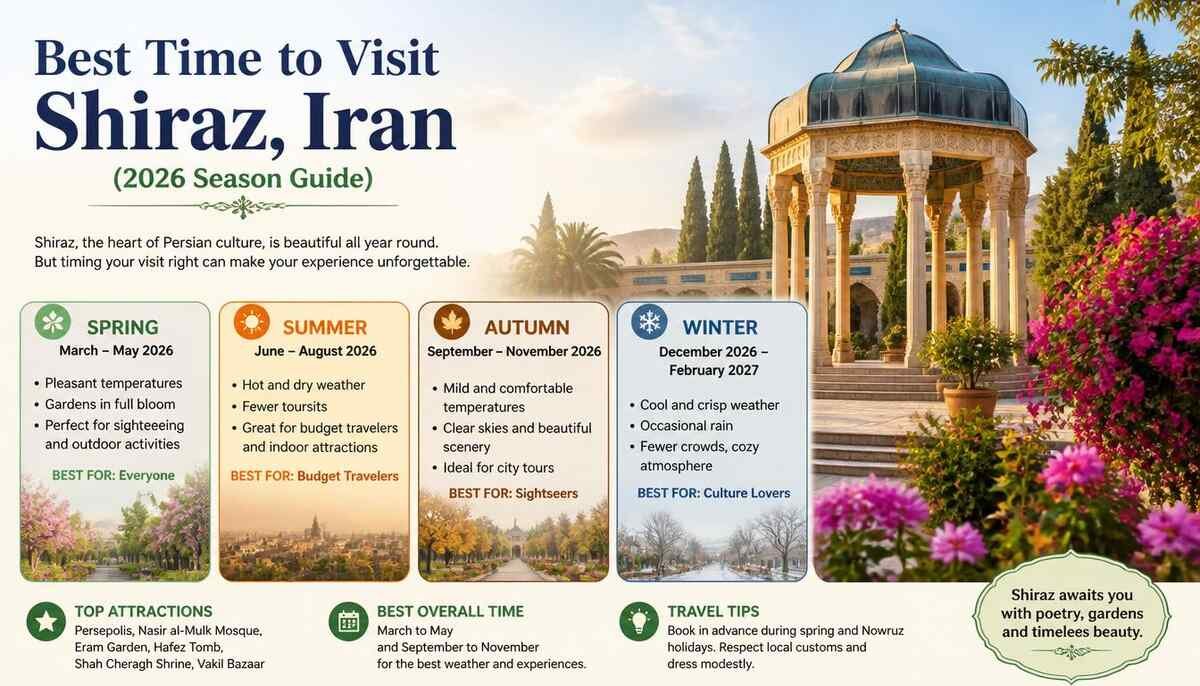
The best time to visit Shiraz is late March through May, or September through November. Spring brings blooming Persian gardens and the orange blossom season, while autumn offers mild, dry days perfect for walking through Vakil Bazaar or touring Persepolis. Skip late June through August unless you can handle daytime highs near 37°C (98°F).
Spring and autumn are your two best windows. Everything else in this guide builds on that, but here’s the short version before we get into it.
From late March to May, Shiraz shakes off winter and turns green almost overnight. Temperatures sit in a comfortable range, the famous Persian gardens are in full bloom, and the sour orange trees lining the streets fill the air with a scent that’s become part of the city’s identity. This is peak season for a reason — it’s genuinely the prettiest version of Shiraz you’ll see.
September through November is the quieter alternative. The brutal summer heat has broken, the light turns softer for photos, and you’ll share Eram Garden and the Pink Mosque with noticeably fewer tour groups. If you’d rather skip the spring crowds and still get good weather, autumn is the smarter call.
Why Autumn Is the Smarter Pick for Repeat or Budget Travelers

Autumn doesn’t have the bloom, but it has everything else spring has minus the crowds. September stays warm without tipping into summer extremes, and by October and November the days settle into a genuinely pleasant range for walking tours, day trips to Persepolis, and sitting outside at a teahouse without sweating through your shirt.
If you’ve already seen the gardens in bloom, or you’re traveling on a tighter budget, autumn gives you nearly the same experience for less.
Also Read: Best Places to Visit in Iran for History,
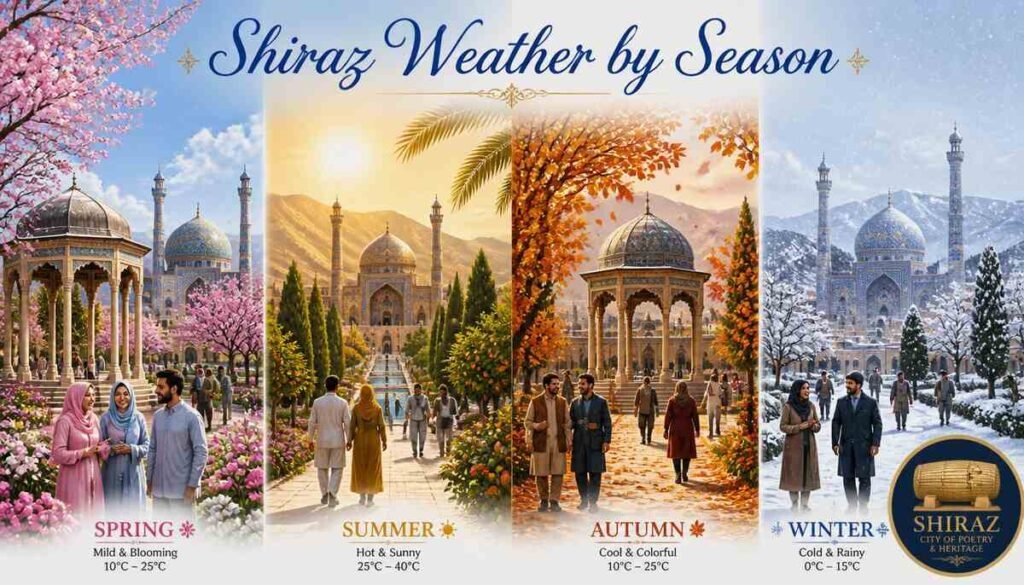
Shiraz Weather by Season
Spring: Blooms, Nowruz, and Rising Crowds
March starts cool and finishes warm, with daytime highs climbing from around 18°C to the low-to-mid twenties by late April. Rain is still possible early in the season but tapers off fast. By May, highs push into the high twenties and occasionally the low thirties, which is your signal the shoulder season is ending.
The catch: this is also the busiest and most expensive stretch of the year, driven almost entirely by Nowruz.
Summer: Why June, July, and August Are the Months to Avoid
Shiraz doesn’t do mild summers. July regularly hits highs around 37–38°C, and the heat holds through August with almost no rain to break it up. Humidity stays low, so it’s a dry heat, but dry heat at 38°C is still 38°C.
June is the exception worth knowing about: it’s the driest month of the year and also the least crowded, since most travelers avoid summer entirely. If you can handle the heat and want empty gardens and cheap rooms, June is a legitimate budget play. Everyone else should wait it out.
Autumn: The Underrated Shoulder Season
September opens warm, still carrying some of summer’s heat, then cools steadily through October and November. By late autumn, daytime temperatures settle into the high teens to mid-twenties, rainfall is minimal, and the light gets that lower, warmer quality that makes the Pink Mosque’s stained glass look even better in photos.
This is arguably the best value season: good weather, thin crowds, and prices that haven’t spiked the way they do around Nowruz.
Winter: Cold Nights, Low Prices, Few Tourists
Winter in Shiraz is mild compared to the rest of Iran, but it’s still genuinely cold, especially at night. January is the coldest and wettest month, with lows dipping close to freezing and the year’s heaviest rainfall. Snow in the city itself is rare, though the surrounding mountains do get a dusting.
The upside is cost. Hotels and flights bottom out in winter, and you’ll have major sites nearly to yourself. If you’re comfortable layering up for cold evenings, winter is the cheapest way to see Shiraz.
Best Time to Visit Shiraz’s Top Attractions
Eram Garden and Orange Blossom Season
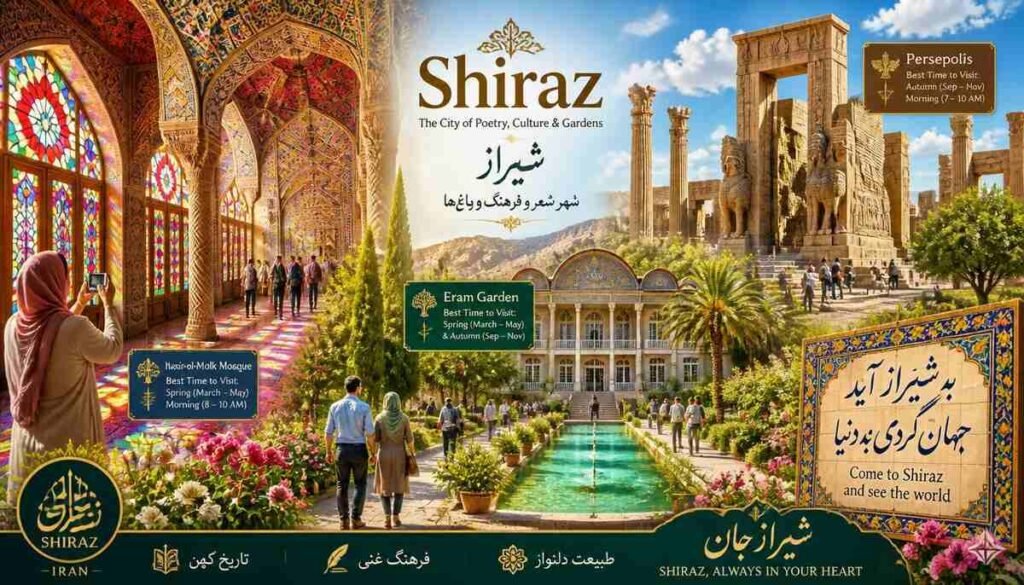
Eram Garden peaks in spring, when the citrus trees bloom and the formal Persian garden layout is at its most photogenic. Visit in April for the strongest bloom. Autumn still offers a pleasant, well-maintained garden, just without the flowers.
Persepolis Day Trip
Persepolis sits outside the city with little shade, so the season matters more here than almost anywhere else on your itinerary. Spring and autumn mornings are ideal you’ll want to arrive early either way to beat both the heat and the tour bus crowds, but in summer an early start stops being optional and becomes a survival strategy.
Nasir-ol-Molk (Pink Mosque)
The mosque’s famous stained-glass effect depends on morning sun, not season, so this one’s more about time of day than time of year. Arrive shortly after opening, any time between autumn and spring, for the clearest light and the smallest crowd.
Shiraz During Nowruz (Persian New Year)
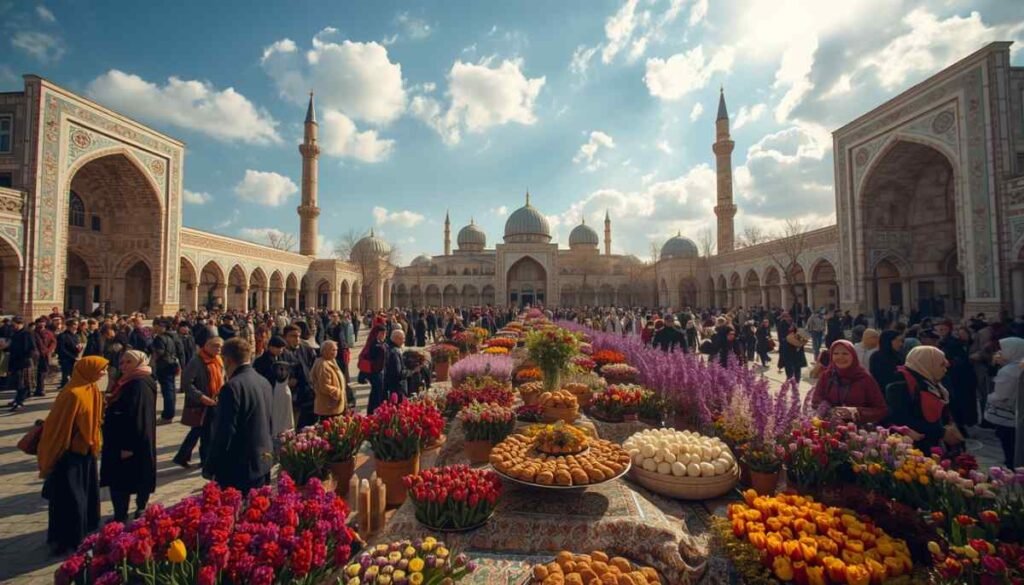
Nowruz falls around the spring equinox, typically March 20–21, and kicks off roughly two weeks of national holiday. For Shiraz, this means the single busiest stretch of the entire year domestic tourism spikes hard, since Iranians travel in large numbers during this period, and hotel prices climb along with it.
If your goal is to see the gardens in bloom, Nowruz timing can actually work in your favor since the season overlaps. If your goal is smaller crowds and better rates, plan around it rather than through it — either arrive just before the holiday starts or wait until it wraps up in early April.
What to Pack for Shiraz by Season

Spring calls for layers: warm days, cooler evenings, and a light rain jacket for early March. Summer is straightforward light, breathable fabric, sun protection, and a reason to avoid midday walking outdoors. Autumn mirrors spring in reverse, warm early on and cooling into November, so pack the same layered approach. Winter needs a proper coat for evenings even though daytime can feel mild in the sun.
Regardless of season, modest dress is expected when visiting mosques and other religious sites, so pack accordingly no matter when you go.
Is Shiraz Safe to Visit Right Now?
Travel advisories for Iran change based on the current geopolitical situation, and they’re worth checking close to your travel date rather than relying on older information. Before booking, check your government’s current travel advisory for Iran directly, and factor that into your season planning alongside the weather.
Best Time to Visit Shiraz Quick Reference
A full month-by-month breakdown of temperature, rainfall, and crowd levels is in the table below.
Shiraz Weather and Travel Conditions by Month
| Month | Avg. High | Avg. Low | Rainfall | Crowd Level | Notes |
| January | 12°C | -1°C | High | Low | Coldest, wettest month; cheap rates |
| February | 14°C | 1°C | Moderate–High | Low | Winter easing, still cool |
| March | 18°C | 6°C | Moderate | Rising fast | Nowruz begins around Mar 20–21 |
| April | 23°C | 10°C | Low–Moderate | Very High | Orange blossoms, peak spring |
| May | 30°C | 14°C | Low | High | Warm, still lush, less crowded than April |
| June | 36°C | 18°C | Very Low | Low | Driest month, hot, budget-friendly |
| July | 37–38°C | 20°C | Very Low | Low | Hottest month of the year |
| August | 36°C | 19°C | Very Low | Low | Still extreme heat |
| September | 32°C | 16°C | Very Low | Moderate | Heat easing, good value |
| October | 25°C | 12°C | Low | Moderate–High | Ideal shoulder-season weather |
| November | 19°C | 7°C | Low | Moderate | Cool, comfortable, few crowds |
| December | 14°C | 2°C | Moderate | Low | Mild winter start, budget season |
Frequently Asked Questions About the Best Time to Visit Shiraz
What Is the Best Month to Visit Shiraz?
April is widely considered the best month to visit Shiraz. The city’s famous orange blossoms are in full bloom, gardens look their most beautiful, and daytime temperatures are pleasantly mild. If you can’t visit in April, May and October are also excellent choices thanks to comfortable weather and fewer extremes.
Is Shiraz Too Hot in Summer?
Yes. Summer in Shiraz is very hot, especially during July and August, when daytime temperatures often reach 37–38°C (99–100°F). Rainfall is almost nonexistent, making the heat feel even more intense. If you plan to visit in summer, schedule outdoor sightseeing early in the morning or after sunset.
Does It Snow in Shiraz?
Snowfall in Shiraz is uncommon and usually occurs only during the coldest part of winter, typically in January. When it does snow, it is generally light and short-lived. The nearby mountains, however, receive much heavier and more reliable snowfall.

Finn Cole is a professional celebrity insider and entertainment journalist who lives for the spotlight. From breaking red carpet news to uncovering behind-the-scenes stories of your favorite stars, Finn brings you the exclusive scoop on everything Hollywood and beyond. If it’s trending, he’s already talking about it.