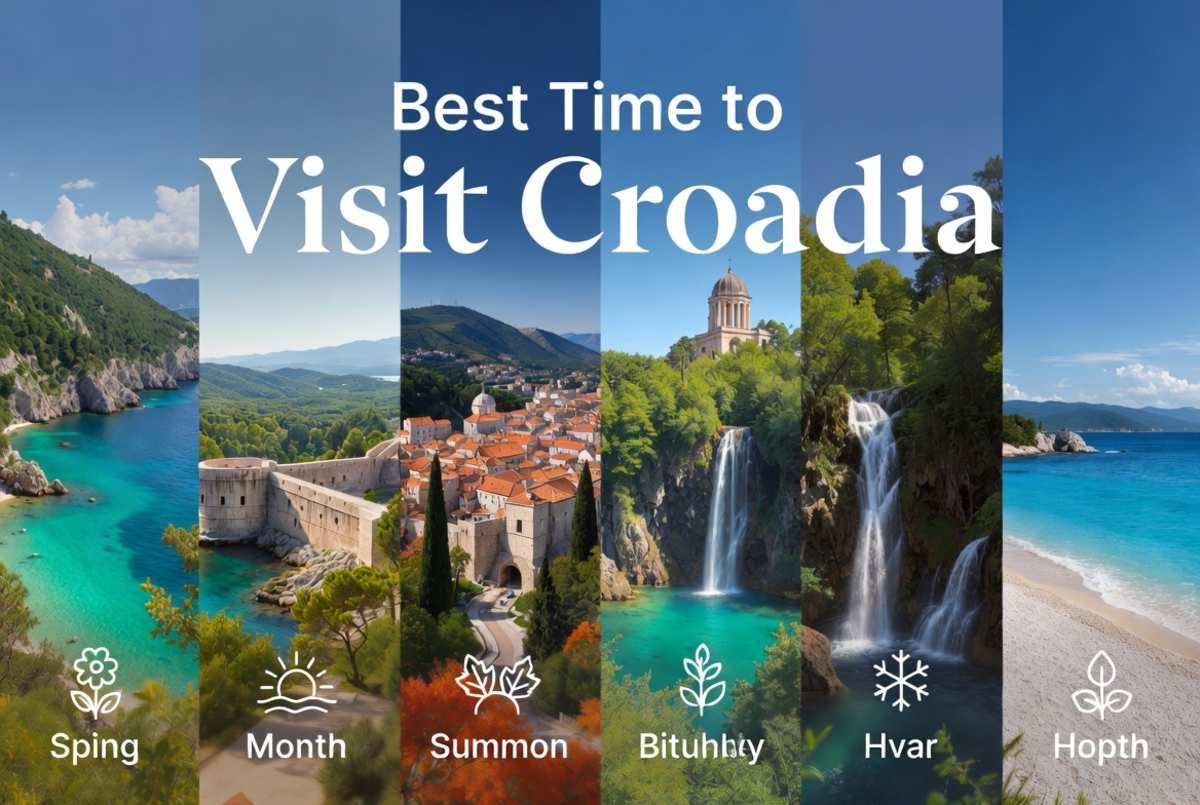
Visit in August and you will find packed beaches, lively nightlife, and warm Adriatic waters perfect for swimming. Visit in October and you will find the same coastline nearly empty, golden light over the old towns, and prices that feel like a different country entirely. Neither time is wrong, but knowing what each season actually delivers makes all the difference in planning a trip that matches what you actually want.
This guide breaks down Croatia’s seasons and months in detail, covers how to time a combined trip with Italy, Slovenia, or Greece, and answers the most common timing questions travelers have before booking. Whether you want beach weather, festival energy, or a quiet, uncrowded version of Croatia, you will find the right answer here.
Understanding Croatia’s Climate Before You Choose a Date

Croatia’s coastline and interior experience genuinely different climates, and this matters more than most travel guides admit.Zagreb and the continental interior, by contrast, face far more extreme temperature swings, with sweltering summer heat that lacks the coastal sea breeze and genuinely cold, sometimes snowy winters.
This split matters when planning a trip that combines coastal and inland destinations, since the same month can feel completely different depending on where you are standing. A June visit to Dubrovnik and a June visit to Zagreb are not really the same trip weather-wise, even though they are only a few hours apart by car.
Best Season to Visit Croatia
Spring in Croatia (March to May)
Spring is when Croatia genuinely starts to wake up after winter, and it has become one of the most recommended times to visit for travelers who want good weather without peak season chaos. Temperatures climb steadily through the season, wildflowers bloom across the islands, and the sea, while still too cold for most people to swim comfortably until late May, looks stunning against the clearing spring skies.
This is an excellent season for hiking Plitvice Lakes National Park or exploring Dubrovnik’s Old Town without fighting through cruise ship crowds. Restaurants and hotels are open but not yet at full summer capacity, which keeps both prices and crowd levels noticeably more manageable than the months that follow.
Summer in Croatia (June to September)
Summer is Croatia’s most popular and most intense season, and for good reason. June marks the real start of summer, with warm, increasingly dry weather and Adriatic waters finally warm enough for comfortable swimming, while tourist season is building but has not yet hit peak intensity. July and August bring the hottest, driest weather of the year along with the absolute peak of tourist crowds, premium pricing, and the most vibrant festival and nightlife scene Croatia has to offer.
September has emerged as one of the standout months in recent years, often described as rivaling July’s weather while offering noticeably better value and a more relaxed, authentic experience. Sea temperatures remain warm well into September, making it an increasingly popular choice for travelers who want summer conditions without summer crowds.
Autumn in Croatia (October to November)
Autumn brings a dramatic shift in Croatia’s atmosphere. October still offers comfortable daytime temperatures and warm enough seas for swimming on milder days, but the crowds thin out considerably and prices drop noticeably across accommodation and tours. This is widely considered one of the best times to experience Croatia’s cities and historic sites without the summer rush.
November moves further into off-season territory, with cooler temperatures, increased rainfall, and many island businesses and ferry routes beginning to scale back or close entirely for winter. This makes November better suited to mainland city exploration, particularly Zagreb, rather than island-focused itineraries.
Winter in Croatia (December to February)
Winter is Croatia’s quietest season by far, particularly along the coast where many hotels, restaurants, and ferry services close or significantly reduce operations. The continental interior, including Zagreb, can see genuinely cold temperatures and occasional snow, while the coast remains milder but often windy and wet.
This season suits a very specific kind of traveler: those looking for rock-bottom prices, completely empty historic sites, and an authentic, lived-in version of Croatia rather than a tourist-facing one. Zagreb’s Christmas markets, regularly ranked among Europe’s best, are a genuine highlight worth planning a winter trip around.
Best Month to Visit Croatia
May and June
May and June consistently rank among the best overall months to visit Croatia, balancing reliably warm weather with crowd levels that are still manageable. By June, the sea is genuinely swimmable, days are long, and most restaurants, tours, and ferry routes are running at full capacity without the peak-season intensity that arrives in July.
July, August and September
July and August are Croatia’s hottest and busiest months, ideal for travelers prioritizing beach time, nightlife, and the country’s biggest festivals, but expect significant crowds and the highest prices of the year. September has increasingly become the preferred choice among experienced Croatia travelers, since it delivers nearly identical warm weather and sea temperatures to July while offering meaningfully better value and a calmer, more relaxed pace.
October
October sits in a genuinely appealing middle ground. Coastal temperatures remain comfortable, the sea is often still swimmable on warmer days, and the dramatic drop in both crowds and prices makes it one of the smartest months for travelers who prioritize value and a more relaxed experience over guaranteed beach weather.
January, February, November and December
These months represent Croatia’s true off-season, with the coast largely quiet, many island businesses closed, and the interior facing genuinely cold, sometimes snowy conditions. This period suits budget-focused travelers and those specifically interested in Zagreb’s winter atmosphere and Christmas markets rather than coastal or island exploration.
Best Time to Visit Croatia for Beaches

If beach time and warm swimming water are the priority, late June through early September delivers the most reliable conditions, with sea temperatures typically reaching their warmest point in August. For travelers who want beach weather without the absolute peak crowds, the final weeks of June and the first half of September offer a strong compromise, combining warm, swimmable seas with noticeably calmer beaches than the height of summer.
Combining Croatia With Slovenia, Italy or Greece
Croatia pairs naturally with several neighboring countries, and timing a combined trip well depends on aligning the shared weather window across destinations.
Croatia and Slovenia
Slovenia’s climate closely mirrors Croatia’s continental regions, making May through September the most reliable window for a combined trip. Slovenia’s Lake Bled and Julian Alps are particularly beautiful in late spring and early autumn, pairing well with a Croatian coastal itinerary bookending the trip.
Croatia and Italy
Many travelers find late May through June or September particularly appealing for this pairing, since both countries see more manageable crowds and pricing compared to peak July and August.
Croatia and Greece
Croatia and Greece share an almost identical Mediterranean climate pattern, meaning the same general timing principles apply to both. June and September stand out as particularly strong months for a combined Adriatic and Aegean itinerary, offering warm, swimmable seas in both countries without the full intensity of peak summer.
Insider Tips for Timing Your Visit
Booking ferries and island transport well in advance becomes essential during July and August, when routes regularly sell out days ahead, while the same routes run with far more flexibility and availability during shoulder season months. If island hopping is a priority, May, June, September, and early October offer nearly all the same ferry routes and island access as peak summer, just without the booking pressure or crowds.
Travelers focused specifically on Dubrovnik should be aware that cruise ship arrivals significantly affect crowd levels within the Old Town on any given day, regardless of season, so checking cruise schedules in advance and planning Old Town visits around quieter days can meaningfully improve the experience even during busier months.
A Real Traveler’s Experience With Croatia Timing
Reading genuine traveler feedback about timing a Croatia trip offers practical insight that goes beyond general seasonal advice.
I received a clear suggested itinerary following just my first enquiry, and booking and payment was quick and simple. As a solo female traveller, I felt safe throughout with the kind and punctual drivers for each transfer, comfortable hotels with friendly staff
This kind of feedback reinforces what the seasonal data shows: October genuinely delivers a smoother, calmer island-hopping experience, with comfortable weather and significantly fewer logistical headaches than peak summer months.
Final Thoughts
There is no single perfect month to visit Croatia, only the right month for the specific trip you actually want. Summer delivers warm seas, lively energy, and the country’s biggest festivals at the cost of crowds and higher prices. Shoulder season months like May, June, and September offer nearly the same experience with considerably more breathing room. Autumn and winter trade beach weather for quiet streets, dramatic value, and a more authentic, slower version of the country.
Whatever time you choose, Croatia tends to deliver. The real planning question is not whether to go, but which version of Croatia you are hoping to find when you get there.
FAQs About the Best Time to Visit Croatia
What is the overall best time to visit Croatia?
May, June, and September are generally considered the best overall months, balancing warm weather and swimmable seas with more manageable crowds and pricing than the peak July and August period.
What is the best time to visit Croatia for beaches?
Late June through early September offers the most reliable warm, swimmable sea conditions, with August typically seeing the warmest water temperatures of the year.
Is September a good time to visit Croatia?
Yes, September has increasingly become one of the most recommended months, offering weather that closely rivals July while providing noticeably better value and smaller crowds across the coast.

Finn Cole is a professional celebrity insider and entertainment journalist who lives for the spotlight. From breaking red carpet news to uncovering behind-the-scenes stories of your favorite stars, Finn brings you the exclusive scoop on everything Hollywood and beyond. If it’s trending, he’s already talking about it.