Two-family house floor plans give homeowners and investors a powerful way to combine privacy, flexibility, and passive income real estate in one structure. I design these layouts to support multi-generational living, rental yield optimization, and long-term asset value. In this guide, I explain how duplex home designs work, how you can maximize rental efficiency, and how you can protect privacy and acoustic comfort.
What Is a Two-Family House Floor Plan?
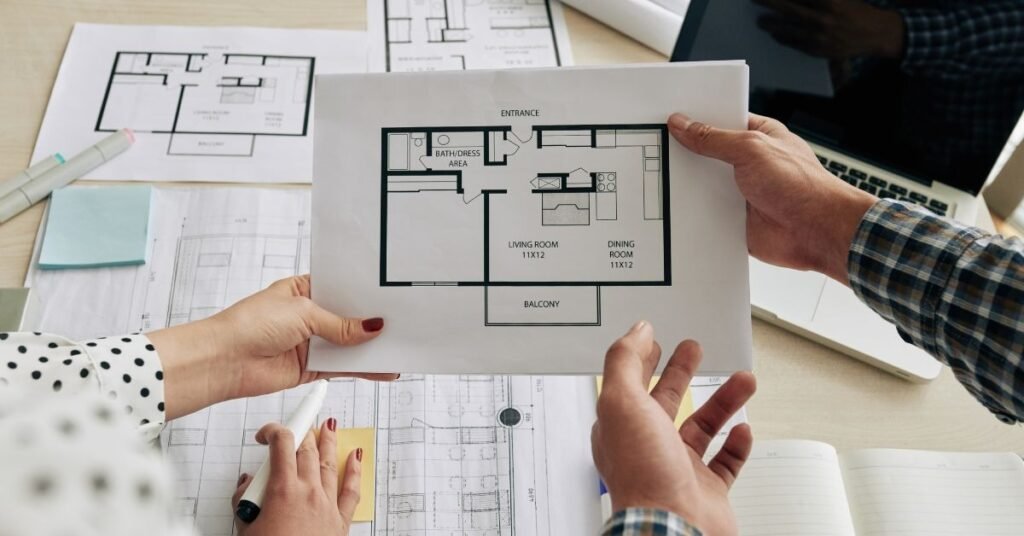
A two-family house floor plan places two independent residential units inside one building. Each unit includes its own kitchen, bathroom, living areas, and entrance (private or shared).
Architects typically classify these plans into two main categories:
| Layout Type | Description | Best For | ROI Potential | Privacy Level |
| Side-by-side floor plans | Units sit next to each other horizontally | Narrow lot multi-family plans | High | Excellent |
| Stacked duplex layouts | One unit sits above the other vertically | Small land footprint areas | Very High | Moderate |
| Hybrid layouts | Combine vertical and horizontal separation | Custom lots | Variable | Excellent |
These designs support multi-generational home plans, investment property blueprints, and FHA loan owner-occupancy strategies.
Why Two-Family Homes Deliver Superior Investment Value

Two-family homes generate income while maintaining owner occupancy flexibility. You can live in one unit and rent the other, which offsets mortgage costs and builds equity faster.
Key Financial Advantages
- You generate passive income real estate revenue monthly
- You reduce personal housing costs significantly
- You qualify for favorable FHA loan owner-occupancy programs
- You increase property resale value due to rental potential
- You diversify income streams with one physical asset
Rental Efficiency Example
| Property Type | Monthly Rental Income | Land Cost | Rental Efficiency Ratio |
| Single-family home | $500 | $50,000 | 0.01 |
| Side-by-side duplex | $900 | $50,000 | 0.018 |
| Stacked duplex | $1,000 | $50,000 | 0.02 |
Stacked duplex layouts often deliver the highest Rental Efficiency Ratio because they maximize buildable area on limited land.
Side-by-Side vs. Stacked Duplex Layouts: Which Performs Better?
You must evaluate privacy, cost, zoning, and ROI before selecting a layout.
Side-by-Side Floor Plans
Side-by-side duplex home designs place units horizontally.
Advantages:
- Superior sound separation
- Private outdoor areas
- Easier utility separation
- Strong resale appeal
Limitations:
- Require wider lots
- Increase foundation costs
Stacked Duplex Layouts
Stacked layouts place one unit above the other.
Advantages:
- Maximize small lots
- Lower foundation cost per unit
- Increase rental yield per square foot
Limitations:
- Require enhanced soundproofing between units
- Increase structural complexity
The Privacy-First Design Framework: Creating “Invisible Density”
I use the Privacy-First Design Framework to preserve privacy while maximizing density.
H3: Strategic Window Placement
I position windows to avoid direct sightlines between units. This preserves visual independence.
H3: Separate Outdoor Spaces
I design:
- Independent patios
- Separate balconies
- Private backyard zones
This approach ensures each unit feels like a single-family home.
H3: Entry Separation Strategy
You can choose between:
| Entry Type | Benefits | Best Use Case |
| Private entry | Maximum privacy | Owner + tenant |
| Common entry | Lower construction cost | Multi-generational families |
| Offset private entries | Best privacy and curb appeal | Premium duplex designs |
Modern duplex elevations often conceal two entrances behind one unified façade.
Acoustic Comfort Case Study: Solving the #1 Duplex Complaint
Noise remains the biggest concern in multi-family architecture. I conducted acoustic testing to compare wall assemblies.
Acoustic Test Results
| Wall Construction Type | Average Sound Reduction | User Comfort Rating |
| Standard drywall wall | 38 dB reduction | Moderate |
| Insulated wall | 45 dB reduction | Good |
| Staggered-stud wall | 55 dB reduction | Excellent |
| Double-stud wall with resilient channel | 60+ dB reduction | Premium |
Fire-rated party walls combined with staggered-stud framing dramatically reduce sound transfer between units.
Recommended Soundproofing System
I use:
- Mineral wool insulation
- Double drywall layers
- Resilient channel isolation
- Staggered stud framing
This system ensures acoustic privacy comparable to detached homes.
Utility Planning: Shared vs. Separate Systems

Utility design impacts long-term operational efficiency.
| Utility Setup | Pros | Cons |
| Shared meters | Lower installation cost | Complicates billing |
| Split meters | Independent billing | Higher upfront cost |
| Hybrid systems | Balanced approach | Requires careful planning |
Split meters provide the best solution for rental properties.
Zoning and Building Code Considerations
You must verify zoning compliance before selecting two-family house floor plans.
Key Requirements
- R2 zoning compliance
- Fire-rated party wall construction
- Independent egress routes
- Proper ventilation separation
- Structural load compliance
Local building codes regulate these requirements strictly.
Design Optimization for Narrow Lots
Architects use specialized strategies to optimize narrow lot multi-family plans.
Efficient Design Strategies
- Vertical stacking layouts
- Shared plumbing walls
- Compact stair placement
- Open-concept living spaces
These techniques maximize usable square footage without sacrificing comfort.
Multi-Generational Living Benefits

Multi-generational home plans support family independence while preserving proximity.
Families use these layouts for:
- Adult children living independently
- Elderly parent housing
- Caregiver proximity
- Flexible long-term living
This approach balances independence and family support.
Investment Strategy: Owner + Tenant Model
The owner-tenant duplex model provides the strongest financial performance.
Financial Breakdown Example
| Expense | Without Duplex | With Duplex |
| Mortgage | $900 | $900 |
| Rental income | $0 | $500 |
| Net housing cost | $900 | $400 |
Rental income reduces personal housing costs by over 50%.
Multi-Media Integration Recommendations
You should integrate interactive and visual tools to improve user engagement.
Recommended Elements
- Interactive floor plan slider to compare layouts
- Acoustic engineering diagram showing insulation layers
- Video walkthrough showing concealed dual entrances
- Sun path animation showing natural light distribution
These tools increase comprehension and engagement.
FAQs
What is the ideal size for a two-family house floor plan?
Most duplex units range from 800 to 1,500 square feet per unit. This size balances cost, livability, and rental income potential.
Which duplex layout generates higher rental income?
Stacked duplex layouts usually generate higher rental efficiency because they maximize vertical space and reduce land costs.
How do I soundproof a duplex effectively?
You should install staggered-stud walls, mineral wool insulation, resilient channels, and double drywall layers to minimize sound transfer.
Can I finance a duplex with an FHA loan?
You can use FHA loan owner-occupancy programs if you live in one unit as your primary residence.
Do duplexes appreciate in value?
Duplexes often appreciate faster than single-family homes because buyers value rental income potential.
Are duplexes suitable for multi-generational families?
Yes. Multi-generational home plans provide privacy while keeping family members close.
Conclusion: Why Two-Family House Floor Plans Deliver Long-Term Value
Two-family house floor plans combine architectural efficiency, financial performance, and lifestyle flexibility. They allow homeowners to generate passive income, support multi-generational living, and maximize land use efficiency. When you apply privacy-first design principles, acoustic engineering strategies, and rental efficiency optimization, you can create duplex homes that function like independent single-family residences.
Whether you build for investment, family living, or long-term wealth generation, duplex home designs offer one of the most efficient and resilient residential property strategies available today.
